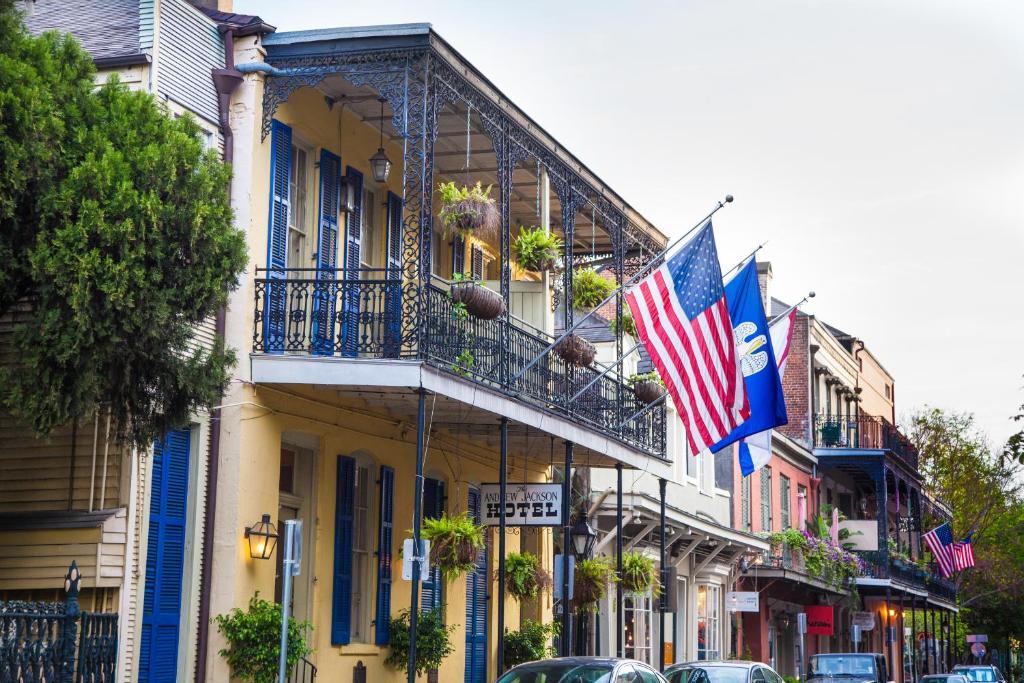
New Orleans, Louisiana · French Quarter history & ghost traditions
New Orleans, after dark.
Read the balconies, courtyards and old streets in daylight, then hear how the French Quarter turned difficult history into a living tradition of stories.
3 days · 2–3 nights6 nearby staysHistory and local legends
The French Quarter is compact on a map and layered in practice: colonial street plans, Spanish-era rebuilding, free and enslaved lives, music, faith, commerce and tourism all occupy the same blocks.
Its ghost stories are part of the neighbourhood's oral and tour culture. This itinerary gives the documented history priority, especially at the LaLaurie house and St. Louis Cemetery No. 1, while leaving space to enjoy the Quarter's architecture and sound.
Get your bearings
The sights. The stays. One map.
Jackson Square anchors the riverside centre of the Quarter. The LaLaurie house is several blocks down Royal Street and is viewed only from public space. St. Louis Cemetery No. 1 lies beyond North Rampart Street and requires the official guided access for ordinary visitors.
Map loading. The sights and hotels are also listed below, with links to their locations.
Showing 6 stays and 3 sights.
A Jackson SquareB LaLaurie Mansion exteriorC St. Louis Cemetery No. 1
Pins locate properties and sights, not a confirmed visitor entrance or walking route. Check the official arrival and access information before setting off.
All six stays are in the French Quarter. Royal, Chartres and Decatur Street properties favour the historic core and river side; Dauphine and Bourbon Street stays place you closer to nightlife, where room position can matter as much as hotel facilities.
Some hotel links are affiliate links. We may earn a commission from qualifying bookings. Stays are chosen for this itinerary; inclusion does not imply that a hotel is haunted.
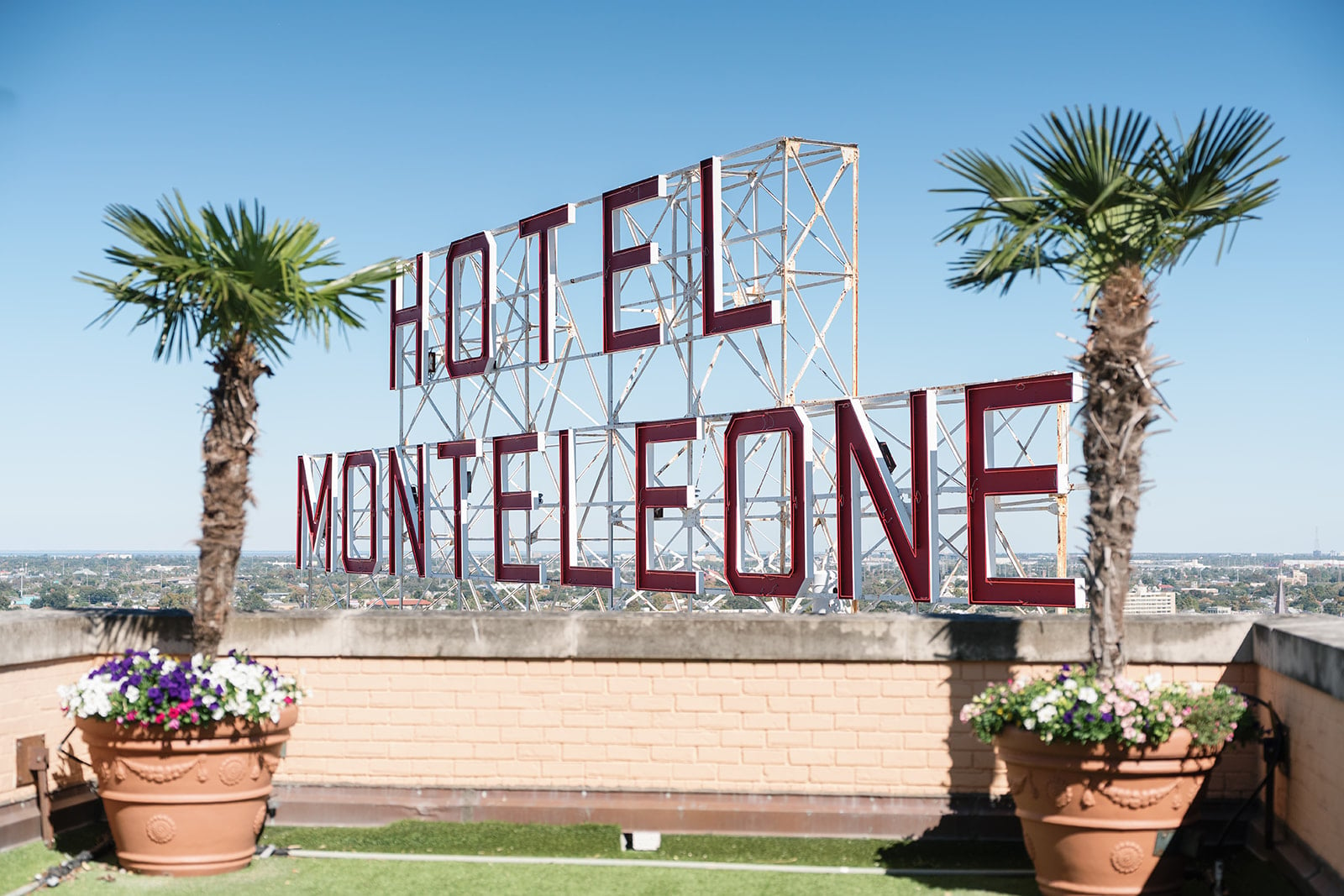
A long-established Royal Street hotel with a rooftop pool, spa and the Carousel Bar. It suits travellers who want a full-service base within the Quarter rather than a small inn.
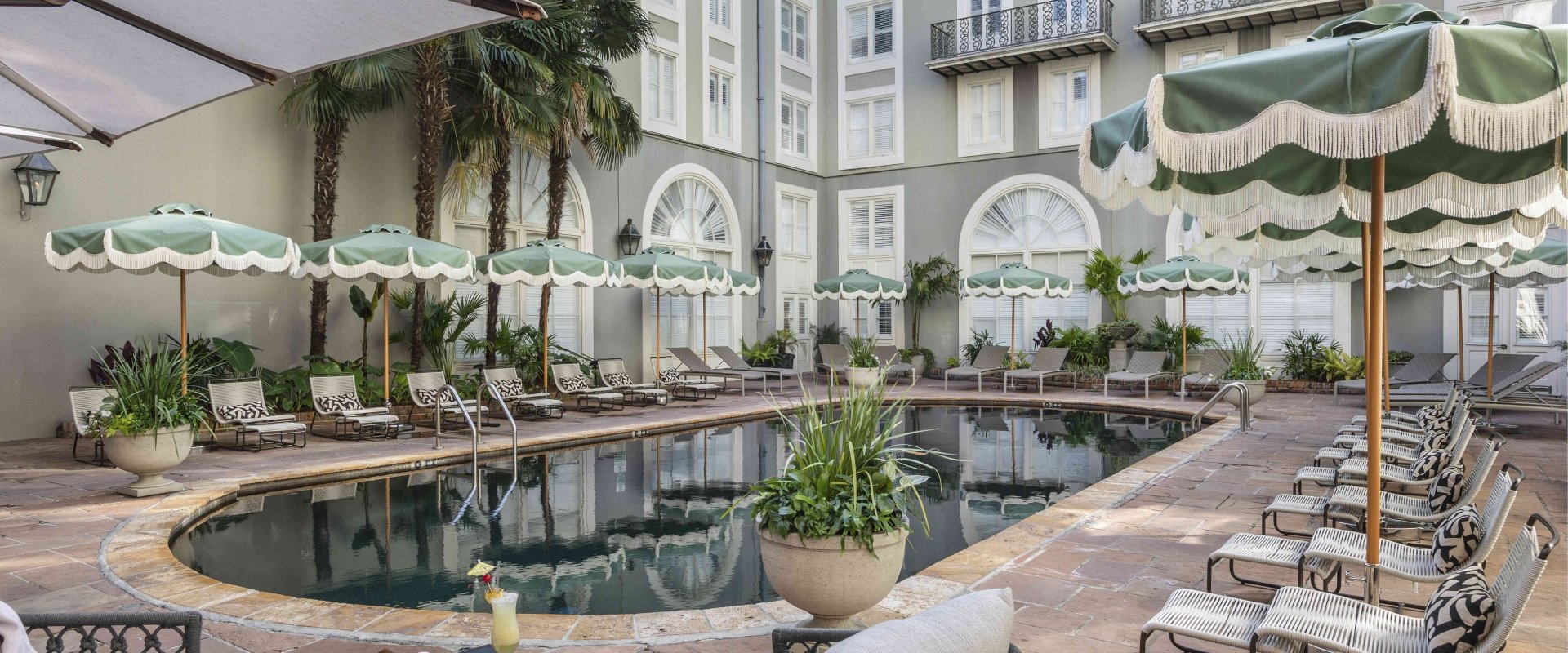
A larger hotel between Bourbon Street and Jackson Square with an interior courtyard pool. It works for visitors who want the central Quarter at the door and a place to pause during the hottest part of the day.
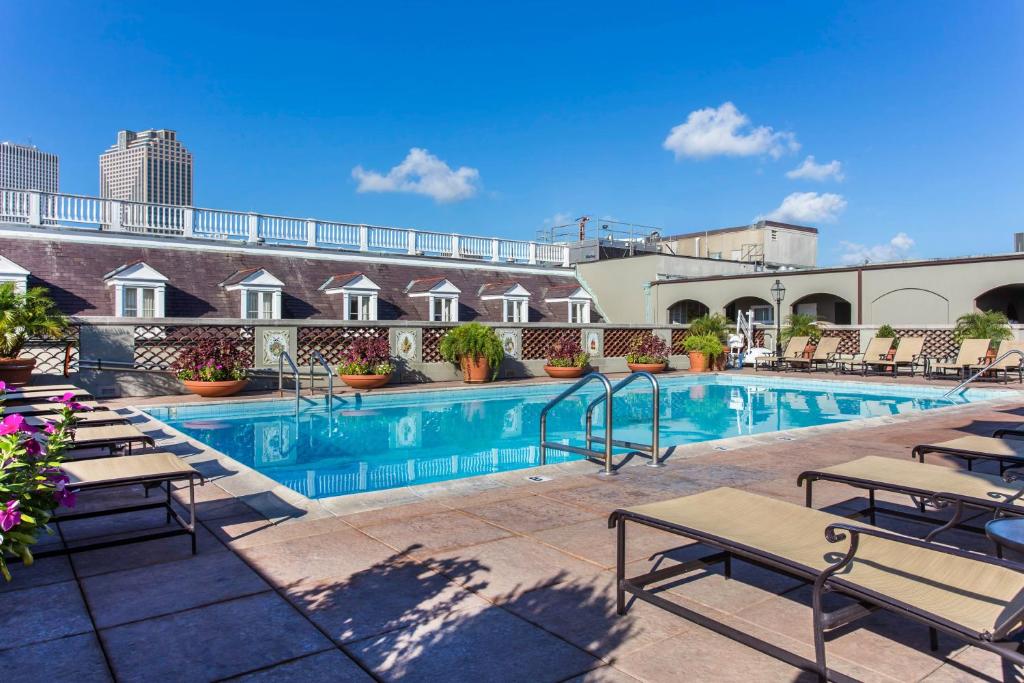
A full-service hotel at Royal and St. Louis streets with a heated rooftop pool and several dining venues. Its position balances Jackson Square, Royal Street and the busier Bourbon Street blocks.
Why consider it
Rooftop pool, fitness centre and multiple food-and-drink options.
Choose the room carefully
Balcony and street-view rooms are category-specific; compare them with interior-facing options if quiet is the priority.
The tradeoff
Valet parking carries a nightly charge and driving inside the Quarter can be slow.
A courtyard-style hotel on the lower Chartres Street side of the Quarter, convenient for the LaLaurie exterior and the French Market area. It offers a calmer-feeling base than the central Bourbon Street blocks.
Why consider it
Multiple courtyards, a pool and a lower-Quarter position near Royal and Chartres Street history.
Choose the room carefully
Buildings and room layouts differ across the property; choose the category and accessibility features carefully.
The tradeoff
It is farther from Canal Street transport and the cemetery than central-Quarter choices.
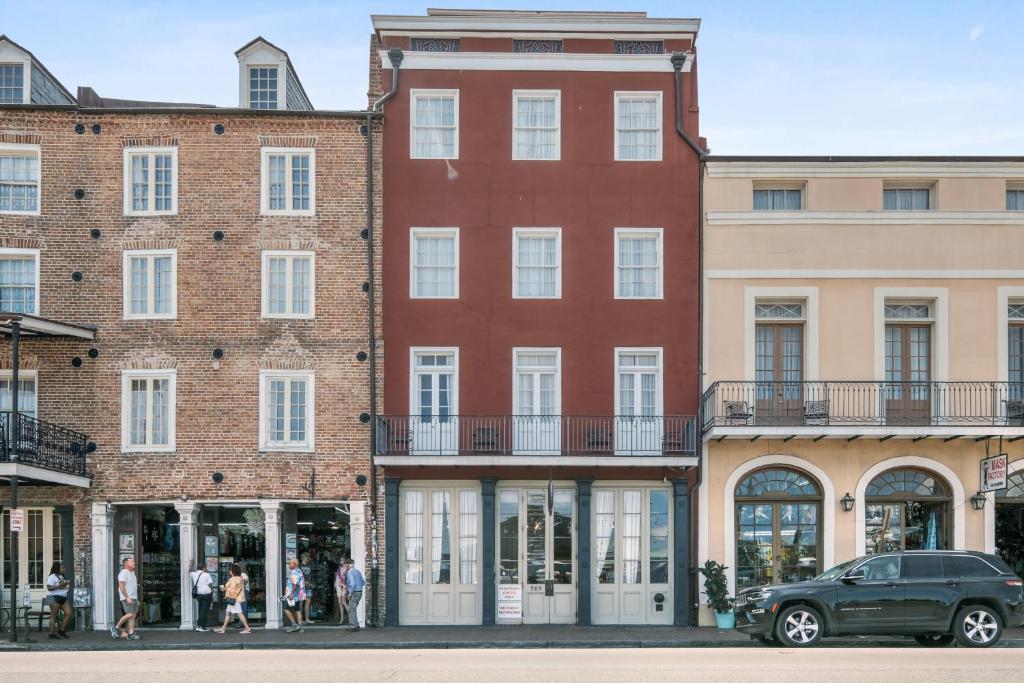
A historic inn on Decatur Street with an interior courtyard and a compact French Quarter footprint. It suits travellers who value the river side, Jackson Square and simple access to the French Market corridor.
Why consider it
Central Decatur Street location and courtyard-style common areas.
Choose the room carefully
Interior, street and courtyard positions differ; choose the category rather than assuming a window or balcony.
The tradeoff
The inn has fewer resort-style facilities than the larger full-service hotels.
A small Royal Street hotel in the lower Quarter, convenient for an exterior stop at the LaLaurie house and for Jackson Square. The courtyard setting gives it a more intimate scale than the large hotels nearby.
Why consider it
Royal Street location and a small courtyard property format.
Choose the room carefully
Balcony and courtyard features vary; check the exact room description and stair access.
The tradeoff
A small historic building offers fewer shared facilities and may have tighter room layouts.
This comparison uses published property information, not a personal hotel inspection. Read recent guest reviews and your selected rate's conditions; availability, inclusions and prices depend on your dates.
Make room for the experience
Your three days in New Orleans French Quarter
A suggested pace with room for breaks and transfers. Match timed tickets, tour dates and your arrival arrangements before booking.
Day 01The Quarter in daylight
Start with the square, the river and the street plan.
Begin at the National Park Service French Quarter visitor centre, then walk toward Jackson Square and the Mississippi. Read the neighbourhood first as a working port city shaped by French, Spanish, African, Caribbean and American lives.
Use Royal and Chartres streets for architecture and galleries before the busiest evening hours. Music and food are part of the place, so leave room for an unhurried meal rather than turning every block into a checklist.
Plan ahead: Heat, rain and uneven paving can change the pace. Build in indoor breaks and wear shoes suited to old sidewalks.
Approach the LaLaurie story from the public street.
Walk Royal Street to the house associated with Delphine LaLaurie. It is private property: view the exterior from public space, avoid blocking entrances and do not treat a residential building as an attraction you can enter.
The documented core is the abuse of enslaved people exposed after the 1834 fire. Later books and tours expanded the story into graphic details and ghost legends; hear those accounts with attention to who is being remembered and how the story changed.
Plan ahead: Choose a licensed walking tour if you want guided storytelling, and verify that its route stays in public space.
Book the cemetery, then give the afternoon back to the city.
Enter St. Louis Cemetery No. 1 only through the authorised guided route required for ordinary visitors. The cemetery is an active sacred place as well as a historic landscape, so follow the guide and its photography rules.
Spend the later afternoon with a museum, music venue or the quieter lower Quarter. The city's stories become richer when cemetery lore sits beside architecture, faith and the history of the people buried there.
Plan ahead: Tour access and hours can change. Book through the cemetery's official visitor information and do not rely on an old blog or an unapproved tour listing.
A real history that later storytellers made stranger.
Founded in 1718, the French Quarter was reshaped by Spanish rule and the fires of 1788 and 1794. Its buildings and streets also hold the history of slavery, free people of colour, migration, religion, commerce and music. At the LaLaurie house, the abuse of enslaved people is the essential documented fact and should not be reduced to a horror prop.
Ghost tours have long attached apparitions, cries and restless presences to Royal Street, hotels and cemeteries. New Orleans' official destination organisation acknowledges that living tour tradition, but individual supernatural claims remain folklore whose versions vary by teller.
The mansion is private property. View it from the public pavement, do not enter, and avoid obstructing residents or traffic.
Book cemetery access
New Orleans Catholic Cemeteries states that ordinary visitors to St. Louis Cemetery No. 1 must enter with an authorised guide.
Plan for heat and storms
Use water, sun protection and indoor breaks, and check weather alerts before a long walking day.
Choose the room, not just the street
French Quarter rooms can face nightlife, courtyards or interior spaces. Confirm view, balcony, lift access and noise preferences in the exact category.
Sources and how we chose these stays
Prepared by Haunted Hotels from published attraction, tourism and hotel sources, checked 10 September 2026. The itinerary is an editorial suggestion. Ghost stories are attributed traditions, not independently verified supernatural events. The nearby stays are selected for their location and practical fit, not a claim of paranormal activity or a first-hand inspection.
Use the official links for current tickets, visiting arrangements and hotel details. Properties and sights are mapped from the source locations recorded during research; pins do not establish an accessible route.